Transgender Awareness Training Course
Practical trans inclusion training covering respectful communication, transition at work, gender reassignment protection and inclusive organisational practice.
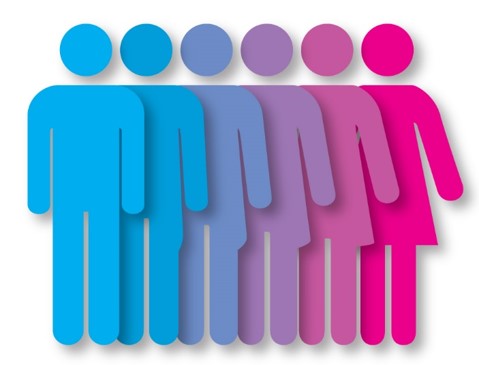 >
>
Practical trans inclusion training covering respectful communication, transition at work, gender reassignment protection and inclusive organisational practice.
>
Trans people may face prejudice, harassment, loss of privacy and barriers in employment and services. This course helps participants approach trans inclusion with respect, confidence and legal accuracy.
In‑house courses are private sessions delivered exclusively for a group of people from your organisation, on a date that suits you, with the option to tailor the content to your staff and setting.
Open courses are public Equality and Diversity UK training dates that anyone can book onto, ideal when you only need training for one or two people.
Delegates explore relevant terminology, lived experiences and practical workplace situations, including privacy, confidentiality, records, communication and supporting a person who is transitioning. The course separates good inclusive practice from the precise language and scope of the law, helping organisations avoid both exclusion and inaccurate claims about legal rights.
Under the Equality Act 2010, the relevant protected characteristic is gender reassignment. A person has this protected characteristic if they are proposing to undergo, are undergoing or have undergone a process, or part of a process, of reassigning their sex by changing physiological or other attributes of sex. Medical treatment, surgery and a Gender Recognition Certificate are not required. “Trans” and “gender identity” are useful inclusive terms, but they should not be presented as if they are themselves named protected characteristics in the Act. Protection may also arise through discrimination by perception or association, and other protected characteristics may be relevant depending on the circumstances.
Following the UK Supreme Court judgment in For Women Scotland Ltd v The Scottish Ministers (2025), the terms “sex”, “woman” and “man” in the Equality Act refer to biological sex. Trans people remain protected from discrimination and harassment under gender reassignment. Any discussion of separate or single-sex services should therefore be handled as a distinct, context-specific legal and policy issue, not reduced to a blanket rule.
These scenarios help delegates explore practical situations involving gender diversity, respectful communication and organisational responsibilities.
A staff member repeatedly uses the wrong pronouns for a colleague despite reminders. The colleague feels disrespected and anxious about attending team meetings.
Discussion prompts:
A service user expresses discomfort because staff did not understand their gender identity or use appropriate language during an appointment.
Discussion prompts:
A colleague discloses their transition but fears negative reactions from peers. They are unsure how to request support or what policies exist.
Discussion prompts:
LGB Inclusion and Sexual Orientation Awareness
Best for focused learning about lesbian, gay and bisexual people, sexual orientation,
homophobia, biphobia and heterosexism.
LGBTQIA+ Inclusion
Best for a broad introduction across diverse sexual orientations, trans inclusion
and a wider range of LGBTQIA+ identities.
Trans Inclusion and Gender Reassignment Awareness
Best for greater depth on trans experiences, transition at work and the Equality Act
protected characteristic of gender reassignment.
These modules outline the key learning areas covered throughout the Transgender Awareness Training Course.
Key concepts, terminology and understanding gender diversity.
Respectful communication, supporting disclosure and reducing barriers.
Understanding real-life challenges and improving service delivery.
Equality Act protections, employer duties and confidentiality.
By the end of the course, participants will be able to:
This course is suitable for employees, managers, HR and people professionals, equality leads, service managers, customer-facing teams, educators, health and care staff, and anyone responsible for policy or practice affecting trans people.
Participants leave with clearer terminology, greater confidence in responding respectfully and a stronger understanding of how to support trans people while applying Equality Act responsibilities accurately.
This course provides equality and inclusion training rather than legal advice. Bespoke legal advice should be obtained for complex decisions, particularly those concerning separate or single-sex services, occupational requirements or competing rights.
All our courses are tailored to ensure the training reflects your organisation’s goals and priorities.
The course can be delivered face-to-face or online via Zoom or Teams.
Please note: the half-day rate is not always available for face-to-face sessions.
Over 25 years' experience delivering equality, diversity and inclusion training, consultancy and professional development.
Keep updated with the latest equality and diversity news, offers and updates.