Safeguarding Training
Practical safeguarding training helping staff recognise concerns, respond to disclosures, understand reporting responsibilities and take appropriate action to protect children and adults at risk.
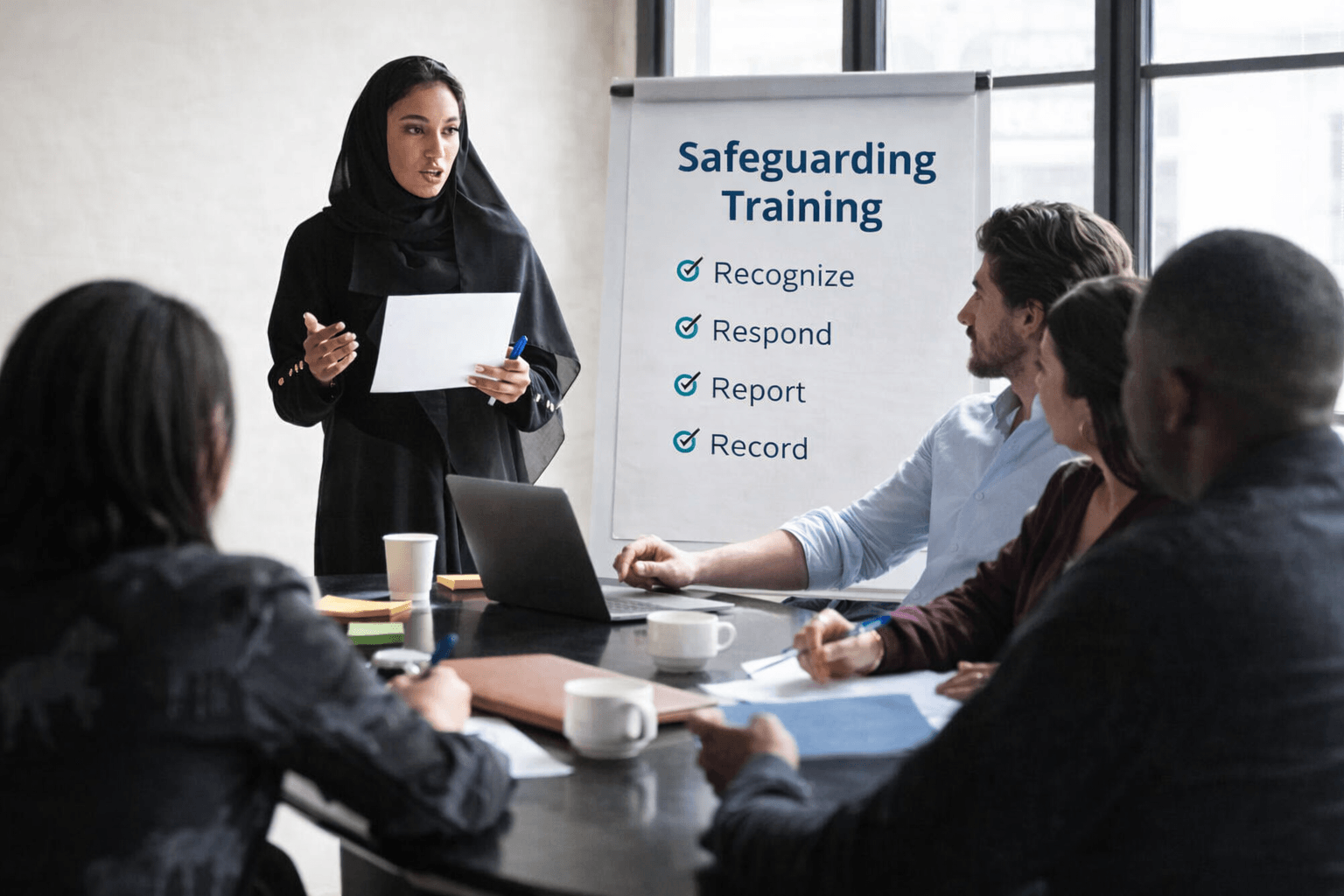
Practical safeguarding training helping staff recognise concerns, respond to disclosures, understand reporting responsibilities and take appropriate action to protect children and adults at risk.
Safeguarding is everyone's responsibility. This practical course helps staff recognise possible signs of abuse, neglect and exploitation, respond appropriately when concerns are raised and understand the importance of following organisational safeguarding procedures. Delegates develop the confidence to notice concerns, listen appropriately, record relevant information and report or escalate matters through the correct channels.
In‑house courses are private sessions delivered exclusively for a group of people from your organisation, on a date that suits you, with the option to tailor the content to your staff and setting.
Open courses are public Equality and Diversity UK training dates that anyone can book onto, ideal when you only need training for one or two people.
Safeguarding is about protecting people's health, wellbeing and human rights and enabling them to live free from harm, abuse and neglect.
The precise responsibilities of an organisation and its staff depend on the setting, the people it works with and the applicable safeguarding framework. This course can therefore be tailored to organisations working with children, young people, adults at risk or a combination of groups.
The training concentrates on the practical role employees play: recognising concerns, responding appropriately and knowing when and how information should be passed to those with designated safeguarding responsibilities.
A member of staff who notices a safeguarding concern is not normally expected to establish exactly what has happened. Their role is to recognise the concern, respond appropriately, make an accurate record and follow the organisation's safeguarding and reporting procedures.
Safeguarding concerns are not always obvious. Indicators can be physical, behavioural, emotional, financial, environmental or connected with changes in a person's relationships or circumstances.
One sign does not necessarily establish that abuse or neglect has occurred. Delegates learn to remain alert to patterns, changes and information that may require further safeguarding consideration.
The course explores forms of harm relevant to the commissioning organisation. These may include physical, sexual, emotional or psychological abuse, neglect, financial or material abuse, discriminatory abuse, domestic abuse, organisational abuse, exploitation and online or technology-facilitated harm.
Where relevant, the programme can also address specific safeguarding issues affecting the organisation's service users or communities.
How somebody responds when a person begins to disclose abuse or harm can have a significant effect on what happens next.
Delegates explore how to listen calmly, avoid expressing disbelief or blame, avoid promising absolute confidentiality and refrain from asking unnecessary or leading questions.
The emphasis is on listening to what the person chooses to say and then taking appropriate action in accordance with safeguarding procedures.
This course is suitable for employees, volunteers, managers and organisations whose work may bring them into contact with children, young people or adults who may be at risk of abuse, neglect or exploitation.
Content can be adapted to education, charities, care and support services, housing, community organisations, public services and other workplace settings.
Notice indicators, changes, disclosures and situations that may raise a safeguarding concern.
Listen appropriately, remain calm and avoid investigating or making promises you cannot keep.
Record relevant information and follow the appropriate safeguarding and escalation route.
Good safeguarding records should be clear, timely and factual.
Delegates consider the difference between what they directly observed or were told and their own interpretation. Where a disclosure has been made, recording important words used by the person can help preserve an accurate account.
The course also reinforces the importance of following organisational arrangements for storing and sharing safeguarding information.
Safeguarding can involve sensitive personal information, but confidentiality should not be confused with secrecy.
Staff should avoid promising that information will never be shared. Where a safeguarding concern needs to be passed on, information should be handled through appropriate organisational procedures and shared with those who need it for legitimate safeguarding purposes.
Where somebody appears to be in immediate danger or urgent medical assistance is required, protecting life and immediate safety takes priority. Staff should follow emergency and organisational safeguarding procedures rather than waiting for a routine reporting process.
Professional curiosity means remaining respectfully alert when information does not seem to fit, circumstances change unexpectedly or several apparently minor concerns begin to form a pattern.
It does not mean interrogating people or attempting to conduct an investigation. Instead, it means noticing, considering context and passing concerns to the appropriate person.
Safeguarding practice should recognise that people's experiences of harm and their ability to seek help can be affected by disability, communication needs, age, sex, race, religion or belief, sexual orientation, gender reassignment, language, culture, immigration circumstances, economic circumstances and other aspects of identity or experience.
Staff should avoid stereotypes. For example, disability should not automatically be treated as evidence that somebody lacks capacity, and cultural difference should never be used to excuse abuse.
People may communicate distress or disclose harm in different ways.
Some individuals may need communication support, accessible information, additional processing time or a different environment in which to speak. Neurodivergence, learning disability, sensory impairment, trauma and language differences can all affect communication.
Inclusive safeguarding means making reasonable efforts to ensure that communication barriers do not prevent concerns being heard.
Abuse can occur where somebody exploits a position of power, authority, trust or dependency.
Delegates consider how organisational relationships, care arrangements, financial dependency, isolation and unequal power can make it harder for somebody to identify abuse, challenge behaviour or seek support.
Safeguarding increasingly extends into digital environments.
Depending on the organisation, relevant issues may include online grooming, coercive control, harassment, sexual exploitation, image-based abuse, financial exploitation, impersonation and inappropriate online contact.
A safeguarding concern may involve a colleague, volunteer, contractor or other person connected with the organisation.
Delegates consider the importance of following the organisation's designated reporting route rather than attempting to resolve serious concerns informally or confronting the person involved without appropriate guidance.
A person who normally engages confidently becomes withdrawn and anxious around a particular individual.
What should staff notice, record and do next?
Someone begins telling a member of staff about behaviour that has frightened or harmed them.
How should the member of staff listen and respond?
A member of staff observes behaviour by a colleague that appears to cross professional boundaries.
Which reporting route should be followed and what should be recorded?
By the end of the course, delegates should be better able to:
All our courses are tailored to ensure the training reflects your organisation's goals, safeguarding practices and priorities.
The course can be delivered face-to-face or online via Zoom or Teams.
To support participation, discussion and interaction, we recommend the following group sizes per session:
Need to train a larger workforce? No problem. We regularly work with organisations that need to train larger numbers of employees. Where appropriate, training can be delivered across multiple sessions to ensure everyone receives the same high-quality, interactive learning experience. We can develop a delivery programme to suit your workforce size, locations and timescales.
Please note: the half-day rate is not always available for face-to-face sessions.
Over 25 years' experience delivering equality, diversity and inclusion training, consultancy and professional development.
Keep updated with the latest equality and diversity news, offers and updates.